
10 Mexican table manners nobody explains to you
By Liliana Ramos11 min read
Bringing something, trying what you're offered, saying "no more, thanks" without offending, offering the last piece, staying for the sobremesa and accepting the itacate: ten Mexican table courtesies that help you make a good impression in Querétaro.
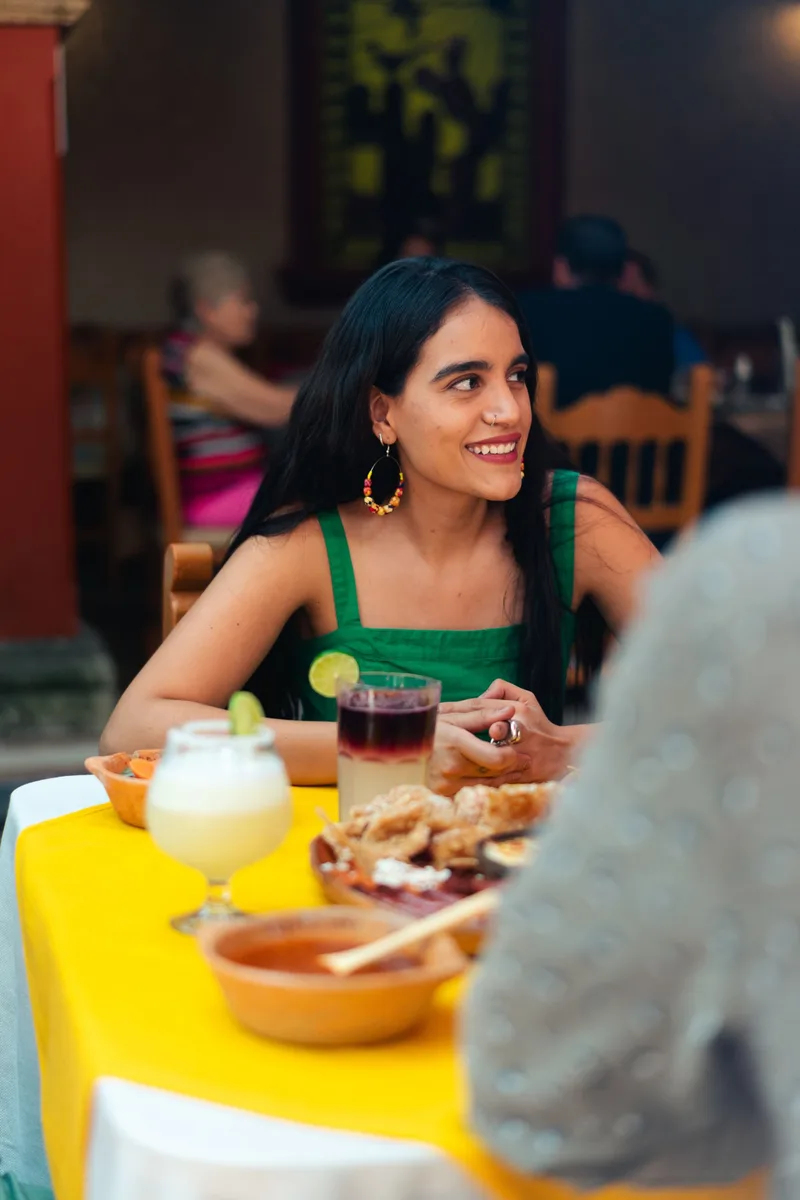
In Mexico, food is much more than eating: it's how people welcome you, thank you and become your friends. So when you're invited to a Mexican table, what people notice most isn't whether you know which fork to use, but how you accept, how you say thank you and how long you stay.
These are courtesies nobody writes down and almost nobody explains, because people who grew up here learned them without noticing. In this guide we share ten of them, so that at your first meal in a home in Querétaro, or your first business lunch, you feel at ease and make a good impression.
If you haven't read it yet, we suggest starting with our article on 8 things about everyday life in Mexico that surprise newcomers, where we cover mealtimes, the sobremesa and who pays the bill at a restaurant.
#1 Don't arrive empty-handed
If you're invited to eat at someone's home, it's customary to bring something: a dessert, pan dulce (Mexican sweet bread), a bottle of wine, flowers or something typical from your country. It doesn't have to be expensive; it's the gesture that counts.
It's common to ask beforehand: "¿qué llevo?" ("what should I bring?"). You'll often hear "nada, solo vente" ("nothing, just come"), and even so, arriving with something is appreciated. If they ask for something specific, like ice, soft drinks or tortillas, take it as a sign of trust: they already see you as part of the gathering.
#2 Wait to be shown where to sit and when to start, and feel free to ask
When you arrive, greet each person and wait for your hosts to show you where to sit. In many homes, certain places are customarily kept for certain people, such as the head of the table for the head of the family or for the grandmother.
Before you start eating, wait until everyone has their plate or until the host gives the signal, often with "¡provecho!" ("enjoy!") or "¡adelante, sírvanse!" ("go ahead, help yourselves!"). If they tell you "empieza tú, que se te enfría" ("go ahead, or it'll get cold"), feel free to start.
The same goes for restaurants: the polite thing is to wait until everyone has their plate. If they tell you "empieza tú" ("go ahead and start"), you can do so without a problem; but starting without being invited to, knowing that someone else's dish hasn't arrived yet, can be considered rude.
And if a Mexican dish is new to you and you don't know how to eat it, it's perfectly fine to ask: "¿me podrías decir cuál es la manera correcta de disfrutar esto?" ("could you tell me the right way to enjoy this?"). It will be seen as a very courteous gesture, because it shows interest in learning about Mexican food and culture. Don't worry if you don't know how to use a tortilla or how to put together your taco: Mexicans will love teaching you.
#3 Try at least a little
In Mexico, offering food is a form of affection and hospitality. Turning down a dish outright, without tasting it, can feel like turning down the person who made it, especially if it's a family recipe.
If something doesn't appeal to you, take a small portion and try it. If you have an allergy, a special diet or a religious or health restriction, say so naturally and, if you can, in advance: people understand perfectly and your hosts will appreciate it.
If what you were served isn't to your taste, your hosts will appreciate the effort of finishing as much as you can; and when they see you're struggling, they'll understand it's something new to you and won't insist that you finish it. What could be considered rude is not even trying a second bite, however kindly and respectfully. Mexicans put a lot of care into preparing their food, and openly saying you didn't like something could come across as disrespectful.
#4 How to say "no more, thanks" without offending
Be ready to be offered more than once: "¿no quieres más?" ("don't you want more?"), "sírvete otro" ("have another one"), "ándale, uno más" ("come on, one more"). Insisting is part of hospitality, and saying "no, thank you" just once isn't always enough.
Phrases that help
- "Muchas gracias, estuvo delicioso, pero ya quedé muy satisfecho." ("Thank you so much, it was delicious, but I'm really full.")
- "Ya no puedo más, pero me encantó." ("I can't eat another bite, but I loved it.")
- "Gracias, me guardo para el postre." ("Thanks, I'm saving room for dessert.")
The key is to pair your "no" with a compliment on the food. That makes it clear it's not that you didn't like it, but that you've eaten well.
#5 The last piece: offer it first
It's very common for a last taco, a last slice of cake or the last piece of bread to be left on the table, with nobody wanting to take it. In Mexico it even has a name: "el taco de la vergüenza" ("the taco of shame") or "el pedazo del qué pena" ("the how-embarrassing piece").
The polite thing is to offer it before taking it: "¿alguien lo quiere?" ("does anyone want it?") or "¿te lo partimos?" ("shall we split it?"). If nobody wants it and they tell you "cómetelo tú" ("you have it"), then go ahead. Taking it without offering can seem a little rude, and leaving it on the plate forever isn't necessary either.
#6 Compliment the food, and ask for the recipe if you like
Saying that something is delicious is almost a must, and it's especially appreciated when you say it to the person who cooked. Asking "¿cómo lo preparaste?" ("how did you make it?") or "¿me pasas la receta?" ("would you share the recipe?") is one of the best compliments: it shows genuine interest and often opens a long conversation about the family and its traditions.
If you liked something in particular, be specific: "the salsa is amazing" means more than a general "everything was very good".
#7 Some things are eaten with your hands
Tacos, tostadas, sopes or gorditas are eaten with your hands, and eating them with a knife and fork can look odd. The tortilla also works as a spoon: many people use it to scoop up beans, rice or stew.
If you don't know how to eat something, watch others or, as we mentioned in point 2, feel free to ask: people will often happily show you their favorite way of doing it.
Something similar happens with spicy food: if you ask "¿pica?" ("is it spicy?"), you'll probably hear "poquito" ("just a little"). Try a small amount of salsa before helping yourself to more.
#8 Offer to help clear up
When the meal is over, "¿te ayudo a recoger?" ("can I help you clear up?") or "¿te ayudo con algo?" ("can I help with anything?") is a gesture people notice. Your host will most likely say "no, siéntate, eres visita" ("no, sit down, you're our guest"), and that's fine: what matters is that you offered.
You can insist once with "de verdad, me gustaría ayudar" ("really, I'd like to help"). They may reply "bueno, si me ayudas con esto, será de gran ayuda" ("well, if you help me with this, that would be a big help"), and doing it will be seen as a very kind and courteous gesture. Or they may say "en serio, no hace falta" ("seriously, there's no need"): that's when you can stop insisting, and the fact that you insisted will still be taken as a nice gesture.
Among closer friends, you can help carry the plates to the kitchen. And if you need to get up from the table at any point, don't forget to say "con permiso" ("excuse me").
#9 Don't leave right after eating
Leaving as soon as you finish your plate can give the impression that you only came to eat. In Mexico, the meal is followed by the sobremesa: coffee, dessert, conversation and sometimes an after-dinner drink. It's the part of the gathering where people really spend time together.
That's why, as we mention in 8 things about everyday life in Mexico that surprise newcomers, it's best not to make plans right after a meal with Mexicans: the sobremesa will almost always be long. And when you leave, say goodbye to each person, just as when you arrived. Keep in mind that goodbyes can take a while too: it's normal for some time to pass between the first "ya nos vamos" ("we're heading off") and actually walking out the door.
When you really do have another commitment and need to leave, kindly mention that you need to be somewhere else by a certain time, and add something like "realmente me gustaría quedarme, pero tengo este compromiso; si no, me hubiera encantado seguir aquí con ustedes" ("I'd really love to stay, but I have this commitment; otherwise I would have loved to stay here with you"). That way your hosts will know you're not leaving because you aren't having a good time, but because of a prior commitment.
#10 Accept the itacate and return the container
If there's food left over and you mentioned that you really liked something, you'll very likely be offered some to take home, so be ready for that possibility. That take-home portion is known as an "itacate". Accepting it is a way of saying you enjoyed the meal.
If they give it to you in one of their own containers, return it clean within the next few days. Many families have the custom of returning it with something inside, like cookies or a dessert you made yourself: it's a way of closing the circle and keeping the invitation alive.
 Transcültural tip
The best way to return an invitation is to invite them back. It doesn't have to be Mexican food: cooking a typical dish from your country is a gift for your hosts and a lovely way to share your culture. That way the relationship goes both ways, and that second meal is often the beginning of a friendship.
Useful phrases at the table
| Phrase | When to use it |
|---|---|
| "¿Gustas?" "Would you like some?" | To offer some of what you're eating to someone nearby. The usual reply is "no, gracias, provecho" ("no, thanks, enjoy"). |
| "Provecho" "Enjoy your meal" | When you start eating, or when walking past someone who is eating. The reply is "gracias, igualmente" ("thank you, likewise"). |
| "Estuvo delicioso" "It was delicious" | At the end of the meal, to thank whoever cooked or invited you. |
| "Ya quedé muy satisfecho" "I'm really full" | To say you don't want any more without it sounding like a refusal. |
| "¿Alguien lo quiere?" "Does anyone want it?" | Before taking the last piece. |
| "Con permiso" "With your permission" | To get up from the table. |
| "¿Te ayudo a recoger?" "Can I help you clear up?" | At the end of the meal, to offer help. |
| "Gracias por la invitación" "Thank you for inviting me" | When saying goodbye. It's even more appreciated if you repeat it in a message the next day. |
In short
At a Mexican table, attitude is what counts most: arriving with a small gift, trying what you're offered, giving specific thanks, offering the last piece, staying for the sobremesa and returning the invitation. You don't need to know every rule: with curiosity, good humor and a well-timed "con permiso", Mexicans will make you feel at home.
Frequently asked questions
What should I bring when invited to eat at a Mexican home?
A simple gift: a dessert, pan dulce (Mexican sweet bread), a bottle of wine, flowers or something typical from your country. You can ask beforehand, "¿qué llevo?" ("what should I bring?"); even if they say nothing, arriving with something is appreciated.
Is it rude to turn down food in Mexico?
Turning down a dish without tasting it can feel impolite. It's best to take a little and try it. If you don't want any more, pair your "no, thank you" with a compliment, such as "estuvo delicioso, pero ya quedé muy satisfecho" ("it was delicious, but I'm really full"). Allergies and health or religious restrictions are perfectly understood.
What is "el taco de la vergüenza"?
Literally "the taco of shame": the last taco or piece left on the table that nobody takes out of politeness. The courteous thing is to offer it before taking it: "¿alguien lo quiere?" ("does anyone want it?").
What is an itacate?
It's the portion of food your hosts give you to take home. Accepting it is a way of saying you enjoyed the meal; if it comes in one of their containers, return it clean, and if you like, with something inside.